
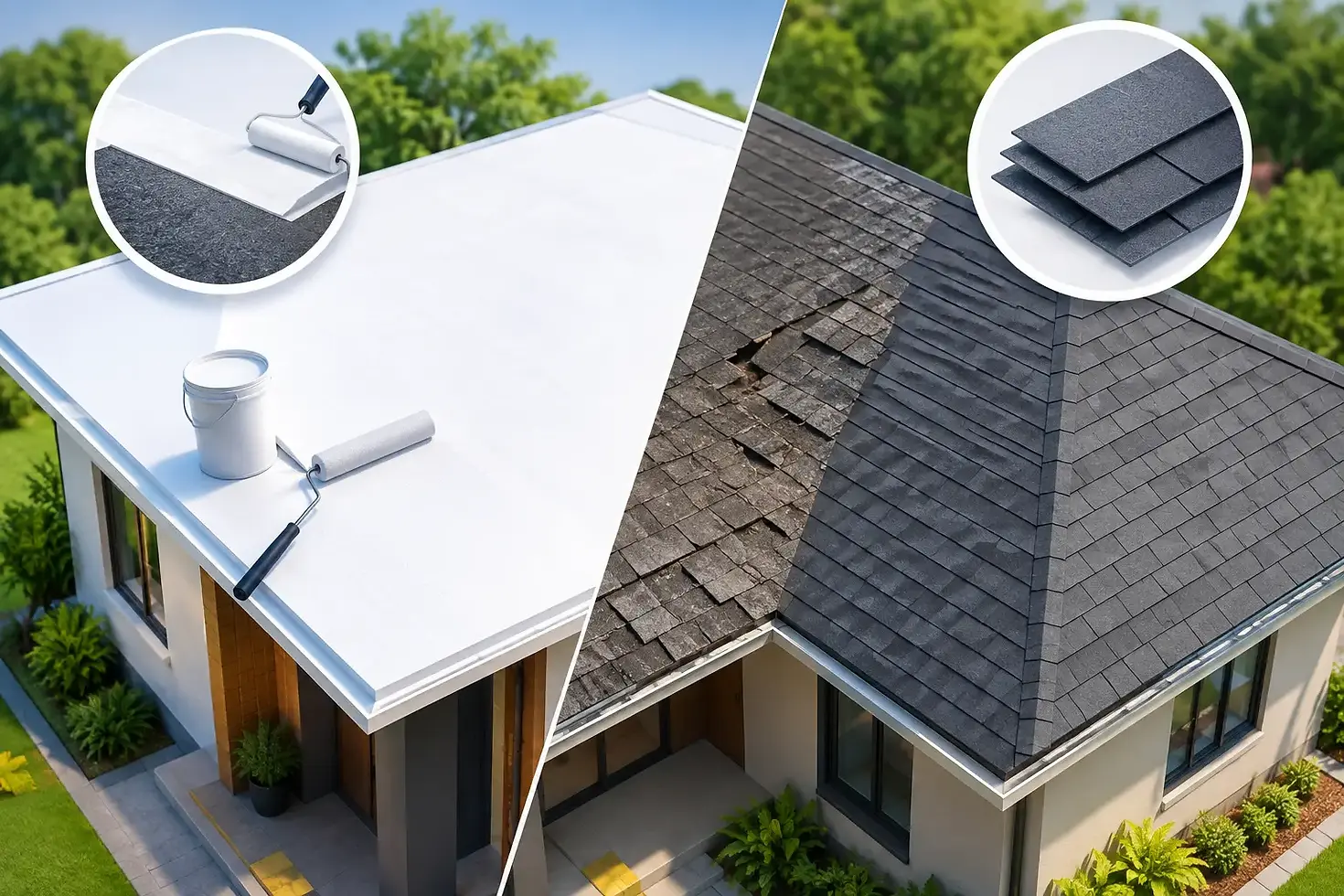
Roof Coating Versus Replacement Explained
A faded, weathered roof can make a well-kept home look tired, but appearance is only part of the decision. When weighing up roof coating versus replacement, the right choice depends on what is happening beneath the surface. A coating can refresh and protect a fundamentally sound roof. Replacement is the safer, longer-term route when tiles, underlay, battens or roof structure are already failing.
For UK homeowners, the aim is not simply to make the roof look newer. It is to protect the property from water ingress, avoid costly damage, maintain comfort and make sure money is spent on work that will last. A proper assessment should always come before a quote.
When a roof coating can be the right choice
A professional roof coating is designed to improve the appearance and weather resistance of an existing tiled roof. Once the roof has been cleaned, repaired where necessary and prepared correctly, a specialist coating can provide a more consistent finish and help protect porous tiles from the effects of rain, frost, algae and airborne dirt.
It can be a sensible option where the roof is structurally sound but looking its age. Common examples include roofs with surface moss, patchy colour, minor tile wear or an overall dull appearance. If the tiles remain secure, the roofline is straight, and there is no evidence of ongoing leaks or decaying timbers, coating may offer a practical improvement without the disruption and cost of a full reroof.
The visual benefit matters too. A clean, even roof finish can lift the appearance of the whole property, particularly when combined with well-maintained fascias, soffits and guttering. For homeowners planning to stay in their home, that can mean greater pride in the property as well as more confidence that the outer surface is being cared for.
However, coating is not a repair for every roofing issue. It will not correct broken battens, failed felt, widespread cracked tiles or a roof that has reached the end of its serviceable life. Applying a coating over unresolved faults can hide the warning signs for a while without removing the cause.
When roof replacement is the better investment
Replacement becomes the stronger option when problems go beyond the top surface of the roof. Persistent leaks, slipped or broken tiles across several areas, sagging roof lines, damaged underlay and rotten timbers all suggest that the roof needs more than a cosmetic or protective treatment.
A full replacement allows the roof covering and supporting elements to be inspected and renewed as needed. It is more disruptive than coating, and the upfront cost will usually be higher, but it can provide a dependable reset for an ageing roof. For a property with recurring repair bills, replacement may be better value than continuing to patch faults year after year.
It is also worth considering replacement if major work is already planned. Homeowners converting a loft, upgrading roof insulation, replacing gutters or improving ventilation may find it more practical to coordinate work while access is already in place. Addressing related issues together can reduce repeated disruption and help create a better-performing roof space.
A new roof is not automatically the answer simply because a property is older. Many roofs have decades of useful life left with the right maintenance. Equally, a roof that looks acceptable from ground level may conceal problems that only become clear on close inspection. This is why an honest assessment matters more than a one-size-fits-all recommendation.
Roof coating versus replacement: the key differences
The clearest difference is the purpose of each option. A coating improves and protects an existing roof covering. A replacement removes worn materials and renews the roof system where required. One preserves a good roof. The other deals with a roof that is no longer dependable.
Cost is naturally a major factor. Coating will generally cost less than reroofing because it does not involve stripping the entire covering and rebuilding multiple layers. Yet the lowest initial price is not always the best value. If a roof needs substantial repair before it can be coated, or if hidden defects are likely to cause further work soon afterwards, replacement may be the more sensible long-term decision.
Timescales also differ. A coating project can often be completed with less disturbance, depending on the size, access and condition of the roof. Replacement takes longer and involves more extensive work, but it offers the opportunity to deal with underlying faults rather than simply improving the visible surface.
The energy-efficiency question requires care. A roof coating is not a substitute for insulation. While a maintained roof helps keep the building fabric dry and protected, meaningful heat-loss improvements usually come from properly installed loft or roof insulation, effective ventilation and attention to gaps around hatches and services. If rooms feel cold or heating bills are rising, it is worth assessing the whole roof space rather than expecting a surface treatment alone to solve the problem.
Signs your roof may be suitable for coating
A surveyor will make the final judgement, but there are useful signs to look for. The roof may be a suitable candidate if the tiles are largely intact and securely fixed, there are no known internal leaks, and moss or staining is mainly a surface issue. It should also have a sound, even appearance without obvious dips, sagging or widespread repairs.
Minor defects do not always rule coating out. A small number of cracked tiles, loose ridge tiles or damaged mortar may be repaired as part of preparation work. What matters is whether these are isolated maintenance issues or symptoms of broader deterioration.
Be cautious of anyone promising to coat a roof without checking its condition closely. Preparation is central to the outcome. The roof needs to be cleaned appropriately, defects need to be identified, and the chosen product needs to suit the roof material. A rushed application may look good initially but fail to provide the durability homeowners expect.
Warning signs that point towards replacement
Water marks on ceilings, damp patches in the loft, daylight visible through the roof covering or recurring leaks during heavy rain should never be ignored. These can indicate problems with tiles, flashings, underlay or the structure beneath.
Other warning signs include a visibly sagging roof, large areas of cracked or missing tiles, crumbling mortar, extensive previous patching and gutters that repeatedly fill with tile debris. If the roof covering is becoming brittle or the felt beneath has deteriorated, a coating is unlikely to be the right answer.
Condensation in the loft should be investigated too, although it does not always mean the roof needs replacing. Poor ventilation and inadequate insulation can create moisture problems even when the roof itself is watertight. The solution may involve improving airflow and insulation rather than replacing tiles. Getting the diagnosis right prevents unnecessary expense and helps protect the home from damp-related damage.
Questions to ask before committing
Before choosing either option, ask what condition the tiles, underlay, battens and roof timbers are in. Ask which repairs are included, how the roof will be prepared, and whether gutters, flashings and roofline components have been checked. It is also sensible to ask what guarantee applies to the installation and materials, and what maintenance will be needed afterwards.
Homeowners should be wary of decisions made solely from photographs or a quick view from the ground. A reliable recommendation considers the age of the roof, access, visible defects, evidence from inside the loft and the condition of related features such as valleys, chimneys and guttering.
At Nest Home Improvements, the focus is on practical work that supports a warmer, drier and more comfortable home. That means looking beyond the immediate appearance of the roof and considering whether cleaning, coating, repairs, insulation or a wider upgrade will give the best result for your property.
A roof should give you confidence when the weather turns, not another item to worry about. Arrange a professional assessment before choosing a route, and you will be far better placed to invest in protection that suits your home, budget and plans for the years ahead.


Comments