
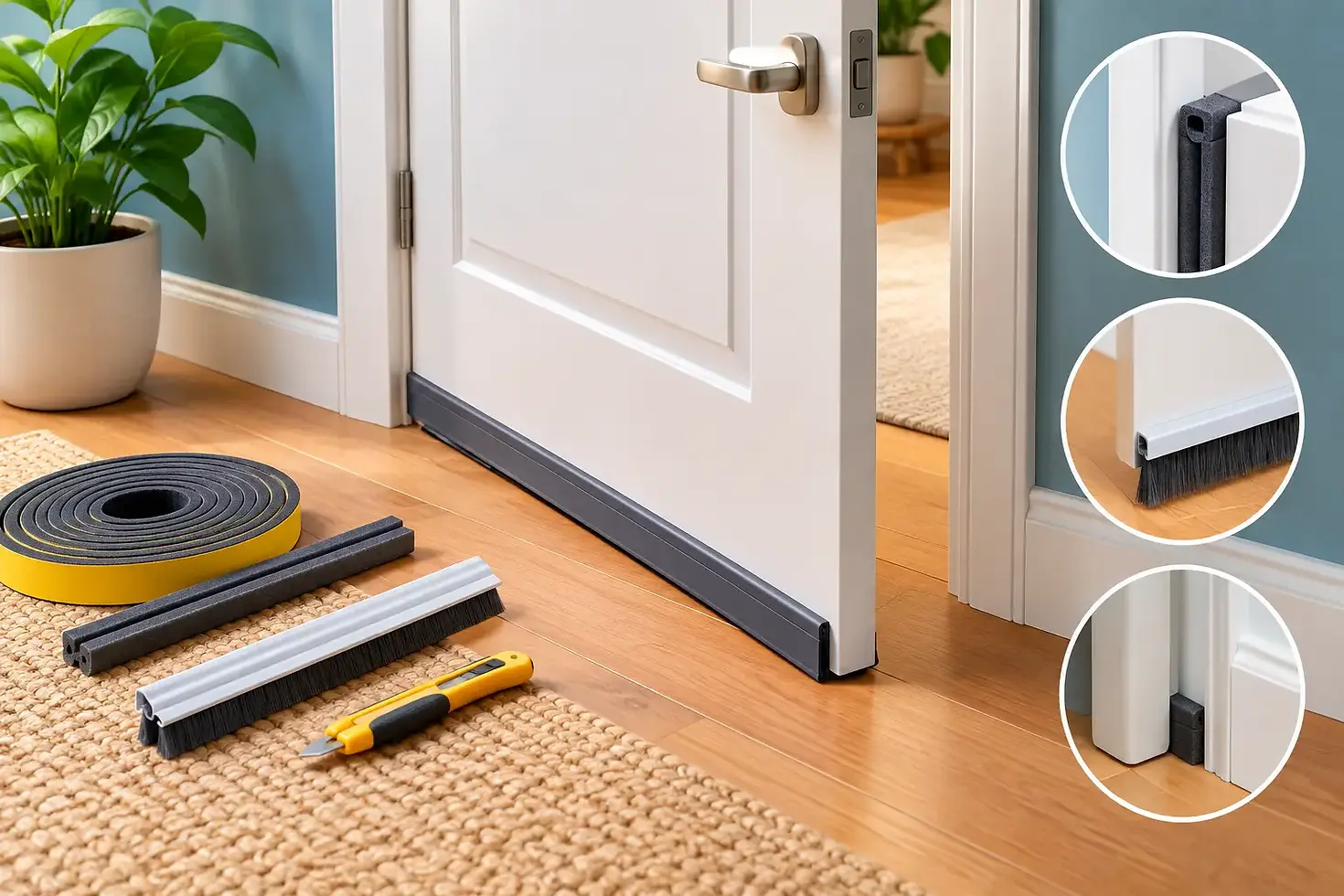
A Practical Guide to Door Draughtproofing
A cold draught at the front door can make the whole hallway feel unwelcoming, even when the heating is on. This guide to door draughtproofing explains how to find the gaps, choose suitable materials and improve comfort without causing issues with ventilation or door operation.
Door draughts are easy to overlook because the gap itself may be small. Yet cold air entering at floor level can quickly spread through halls, living rooms and stairways, making your heating work harder for less benefit. A well-fitted seal is a straightforward upgrade that can help your home feel warmer and more settled during colder months.
Why doors let cold air into your home
Most draughts occur where a door meets its frame, threshold or letterbox. Timber doors can shrink slightly in dry weather and swell in damp conditions, while older hinges, loose locks and worn weatherstrips can leave uneven gaps around the edges. Composite and uPVC doors can also develop draughts if their hinges or keeps are out of adjustment.
The issue is not always visible. You may notice a moving curtain, a cold patch around your feet or a faint whistling noise on windy days. Hallways are particularly affected because they often connect directly to other rooms, allowing cold air to travel further into the property.
A draughtproofed door should still open, close and lock properly. The aim is to seal unwanted gaps around the door, not to block designed ventilation or make the door difficult to use.
How to check a door for draughts
Start on a cold or windy day, when air movement is easiest to detect. Slowly run the back of your hand around the top and sides of the closed door, then along the threshold. Pay close attention to the corners, as gaps can be wider here than they appear.
You can also use a strip of lightweight tissue held near the frame. If it moves noticeably when the door is shut, air is likely entering. Check the letterbox, keyhole and any glazing within the door too. A draught may come from more than one place, so dealing with only the most obvious gap may not deliver the improvement you expect.
Before applying a seal, inspect the door itself. If it catches on the frame, has dropped on its hinges or the lock needs force to engage, adjustment or repair may be the first job. Applying thick draughtproofing to a poorly aligned door can make the problem worse.
A guide to door draughtproofing by problem area
Different gaps need different solutions. Choosing the right product for the location matters more than simply adding the thickest strip available.
Gaps around the sides and top
Self-adhesive foam, rubber or silicone strips are commonly used around the frame. Foam is affordable and can suit small, even gaps, but it may compress and wear more quickly on a frequently used front door. Rubber and silicone seals are generally more durable and better suited to doors that face regular wind and rain.
Measure the gap before buying. A seal that is too thin will not stop the draught; one that is too thick may prevent the door from closing securely. Clean and dry the frame thoroughly before fitting adhesive strips. Dust, old paint residue and moisture can stop the backing from bonding properly.
Fit the seal in continuous lengths where possible, pressing it firmly into place without stretching it. Test the door several times after installation. It should close smoothly and the latch should engage without excessive pressure.
Gaps at the bottom of the door
The gap beneath a door is often the largest source of cold air. For an external door, a brush strip or rubber sweep fitted to the bottom edge can provide a reliable barrier while allowing the door to move freely. These are usually more effective and durable than a fabric draught excluder placed on the floor.
A fixed brush or sweep needs enough clearance from the threshold to avoid dragging, but not so much that air passes underneath. If your threshold is uneven, an adjustable product may offer a better fit. On doors opening onto exposed paths or driveways, select a weather-resistant option designed for external use.
For internal doors, a traditional weighted draught excluder can improve comfort in rooms that feel chilly, particularly where a hallway is colder than the living space. It is simple and inexpensive, but it will move when the door is opened and is not a substitute for a properly sealed external door.
Letterboxes, keyholes and glazed panels
A letterbox can allow a surprising amount of cold air into a hallway. A brush or flap fitted to the inside of the door can reduce this without affecting post delivery. Look for a product that sits neatly against the door and does not obstruct the opening.
For a keyhole, a purpose-made cover can limit draughts while keeping access straightforward. Avoid stuffing gaps with materials that could interfere with the lock or retain moisture against the door.
If the cold area is around a glazed panel, inspect the beading and seals. Failed glazing seals, cracked panels or loose beading are not usually a simple DIY draughtproofing job. They may point to a wider repair requirement, especially if you can see condensation between panes or feel persistent cold around the glass.
Do not block ventilation that your home needs
Draughtproofing is about controlling uncontrolled air leakage. It is not the same as making a home airtight at all costs. Trickle vents in windows, air bricks, extractor fans and purpose-built vents all have a role in managing moisture and maintaining healthier indoor air.
Never cover an air vent in a room with a boiler, open fire, log burner or gas appliance. Doing so can create a safety risk. If you are concerned about cold air from a vent, speak to a qualified professional about suitable options rather than sealing it over.
This balance is especially important in homes already affected by condensation or damp. Better insulation and targeted draughtproofing can make rooms more comfortable, but moisture still needs a route out. Regular use of kitchen and bathroom extraction, sensible heating and appropriate ventilation all work together.
When a draught points to a bigger door problem
A seal will not solve every issue. If daylight is visible around the door, the frame is rotten, the threshold is damaged or water enters during rain, the door and frame may need more than a replacement strip. Likewise, a uPVC or composite door that needs lifting to lock may require hinge or keep adjustment.
Older timber doors can often be repaired and draughtproofed effectively, preserving their character while improving comfort. However, where the door is warped, badly decayed or no longer secure, replacement can be the more sensible long-term investment. A modern, professionally fitted external door can improve weather resistance, security and thermal performance in one project.
It is also worth considering the surrounding areas. A cold porch, poorly insulated loft hatch or single-glazed side panel can make a hallway feel draughty even after the door has been sealed. Looking at the whole heat-loss picture helps you spend your budget where it will make the greatest difference.
A simple maintenance routine that keeps seals working
Check door seals at the start of autumn and again after winter. Look for flattened foam, peeling adhesive, cracks in rubber and brush strips that have become bent or clogged with dirt. Wipe seals with a damp cloth and keep the threshold clear of leaves and grit, which can affect both the seal and the door’s movement.
For painted timber doors, keep paintwork in good condition to reduce moisture absorption and seasonal movement. For uPVC and composite doors, clean the frame and check that hinges, handles and locks operate smoothly. Small adjustments made early can prevent a minor draught becoming a more expensive repair.
A warmer entrance starts with the details you can feel every day: a door that closes cleanly, a hallway without a cold breeze and heating that stays where it is needed. If your door still feels cold after basic draughtproofing, a professional assessment can help identify whether adjustment, repair or replacement will give your home the lasting comfort and peace of mind you want.


Comments