
Loft Insulation vs Loft Boarding Explained
- Dan Price
- Jul 3
- 6 min read
If your loft is freezing in winter, cluttered with boxes, or simply wasted space, the question of loft insulation vs loft boarding matters more than most homeowners realise. Get it wrong and you can end up compressing insulation, losing heat through the roof, and paying more to warm the house. Get it right and you can keep the home warmer, protect energy efficiency, and still gain practical storage.
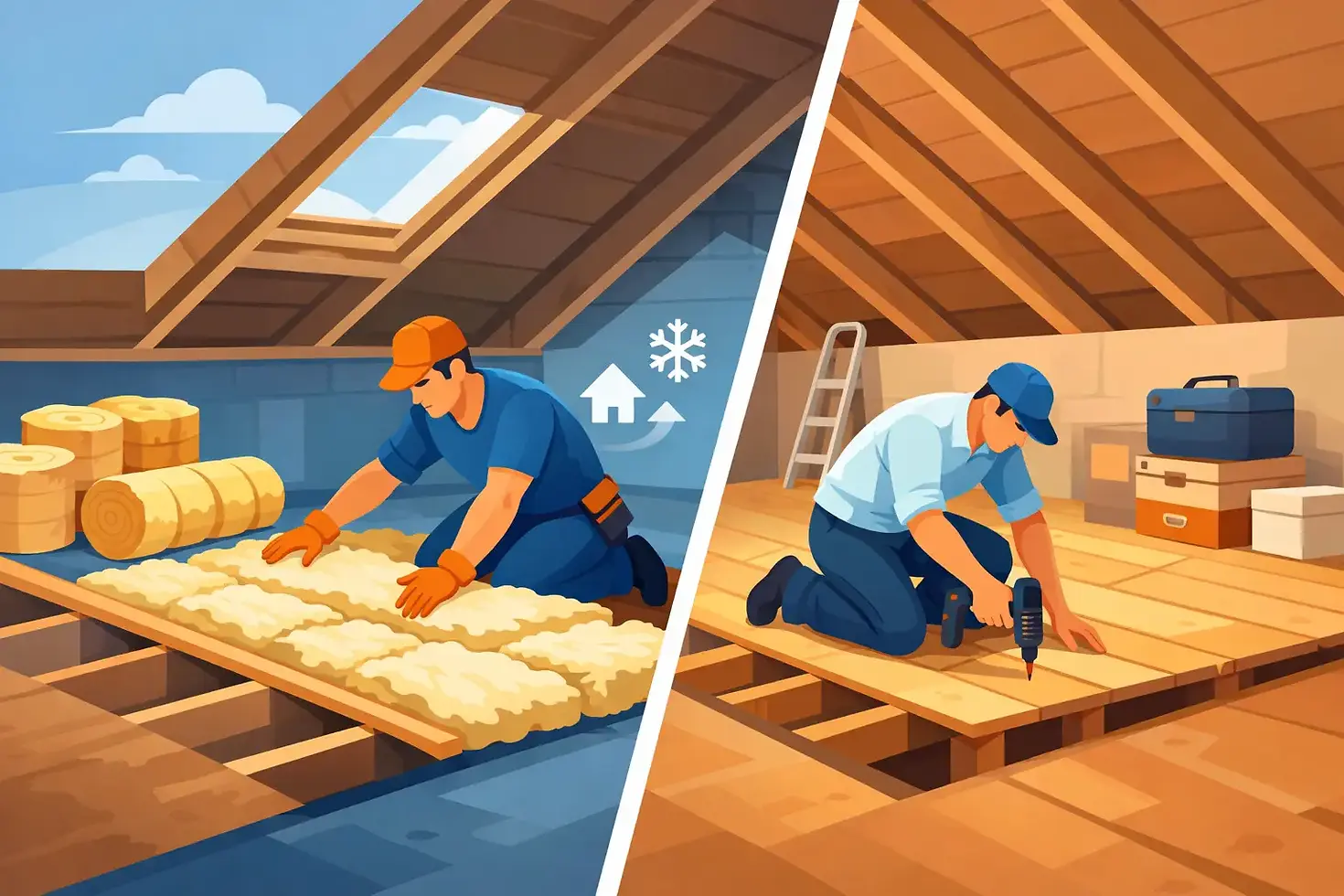
For many homes, this is not really an either-or decision. Insulation and boarding do different jobs. Insulation helps stop heat escaping through the roof, while boarding creates a safe, usable surface for storage. The difficulty is that one can undermine the other if it is fitted badly.
Loft insulation vs loft boarding - what is the difference?
Loft insulation is there to improve thermal performance. It sits across the loft floor or along the roofline, depending on the design of the property and how the loft is being used. Its main job is simple: hold warmth inside the rooms below for longer, so your heating system does not have to work as hard.
Loft boarding is about access and usability. It creates a raised platform or boarded area so you can store household items more safely and move around the loft without stepping between joists. For many households, that extra storage is a real benefit, especially where space is tight elsewhere in the home.
The problem comes when standard boards are laid directly onto joists without allowing enough depth for the insulation underneath. Modern loft insulation usually needs to be deeper than the joists themselves. If boards are fixed straight on top, the insulation gets squashed. Once compressed, it cannot perform as well, which means heat loss increases and the expected savings are reduced.
Why this decision affects warmth and bills
A poorly insulated loft is one of the easiest ways for heat to escape from a property. Warm air rises, and without an effective barrier at loft level, you are heating the house only to lose that warmth through the roof. That is why loft insulation remains one of the most practical energy-efficiency upgrades for many UK homes.
Boarding can still play a useful part, but it should support insulation rather than interfere with it. A properly raised loft boarding system allows the insulation to keep its full depth while giving you usable storage above. That approach helps you avoid the common trade-off between convenience and performance.
For homeowners watching energy costs closely, this matters. The right setup can help keep bedrooms and landing areas more comfortable, reduce strain on your heating, and make the home feel more consistent in colder months. The wrong setup can leave you with a boarded loft that looks tidy but quietly works against the efficiency of the whole house.
Can you have loft insulation and loft boarding together?
Yes, and in many cases that is the best outcome.
The key is how the boarding is installed. Instead of fixing boards directly to the joists, a raised system is used to lift the deck above the insulation layer. This creates enough space for the insulation to sit properly underneath without being flattened. You get storage space, but you also keep the thermal benefit that the insulation is there to provide.
This is particularly important in older properties where insulation may already be patchy, thin, or uneven. Adding boarding without first checking the insulation depth can lock in poor performance. On the other hand, upgrading the insulation and then fitting a raised boarded area can make the loft much more practical without sacrificing warmth below.
When insulation should come first
If your loft is currently under-insulated, draughty, or contributing to cold rooms upstairs, insulation should usually be the priority. Storage is useful, but warmth and efficiency tend to deliver the bigger everyday return.
This is especially true if your heating bills have climbed, the top floor feels noticeably colder than the rest of the house, or you have seen signs of condensation linked to poor thermal performance. In these cases, treating the loft mainly as a heat-loss problem first often makes the most sense.
There is also a long-term value argument. Good insulation supports overall home efficiency, which can help with running costs and general comfort for years. Boarding alone does not do that. It adds convenience, but not thermal protection.
When loft boarding makes sense
Loft boarding becomes more valuable when you already have suitable insulation in place and need better access or storage. Many households use the loft for suitcases, seasonal decorations, paperwork, or items they do not need every week. A properly boarded area makes this far safer and more practical than balancing on joists or laying loose sheets across them.
Boarding can also work well alongside loft ladders and improved loft hatches, especially if you want the loft to feel cleaner, easier to access, and more usable as part of the home. For some homeowners, that combination transforms a neglected loft into a genuinely useful storage area.
That said, not every loft should be fully boarded from wall to wall. Sometimes a partial boarded area is the better solution. It gives enough room for storage while leaving space for ventilation and preserving access for future inspection or maintenance. It depends on the size of the loft, the roof structure, and what you plan to use the space for.
Loft insulation vs loft boarding costs - what should you expect?
Costs vary depending on the size of the loft, the current condition, the depth of insulation required, and whether a raised boarding system is needed. Access can also make a difference. A loft with poor access, awkward angles, or outdated insulation may need more preparatory work than a straightforward modern roof space.
Looking only at the cheapest price can be a false economy. Basic boarding installed directly onto joists may seem attractive at first, but if it crushes insulation and reduces performance, the longer-term cost shows up elsewhere - usually in higher heating bills and a less comfortable home.
A more considered installation may cost more upfront, but it tends to give better results. You preserve energy efficiency, gain reliable storage, and avoid the disruption of having to correct poor work later.
Common mistakes homeowners make
One of the most common mistakes is assuming that boarding is harmless as long as some insulation remains underneath. In reality, insulation works best when it keeps its full loft and continuity. Gaps, compression, and uneven coverage all reduce its effectiveness.
Another mistake is treating the loft as purely a storage problem when the bigger issue is heat loss. If the house feels cold and the loft insulation is outdated, adding boards without addressing thermal performance first can miss the main opportunity.
Ventilation is another point that should not be overlooked. A loft needs the right balance between insulation and airflow. Blocking ventilation pathways can contribute to condensation issues, which is the last thing any homeowner wants in a roof space.
How to choose the right option for your home
The best choice depends on what your loft is failing to do at the moment.
If the home is losing heat, upstairs rooms are cold, and the loft insulation is inadequate, start there. If the loft already has effective insulation but the space is difficult to use safely, boarding may be the next logical step. If you need both warmth and storage, a combined approach is often the strongest answer.
This is where professional assessment makes a real difference. What looks like a simple boarding job may actually need upgraded insulation, raised supports, better access, or attention to ventilation. A good installer will look at the loft as part of the wider performance of the home, not as an isolated DIY project.
For homeowners who want practical results without the guesswork, that joined-up approach offers more peace of mind. You are not just improving the loft. You are improving how the house holds heat, how the space is used, and how well the property works day to day.
Loft insulation vs loft boarding - the better question
In many homes, the better question is not loft insulation vs loft boarding, but how to make both work together properly. Insulation keeps the warmth where it belongs. Boarding makes the loft useful. When the installation is planned properly, you do not have to choose between comfort and storage.
That is why many UK homeowners now look for solutions that raise the boards above the insulation, protect airflow, and create a cleaner, safer loft space at the same time. Done well, it is a practical upgrade that supports lower heat loss, better organisation, and a more comfortable home overall.
If you are weighing up what to do next, focus on the result you want from the space. A loft should not cost you warmth just because you need somewhere to keep the Christmas decorations.


Comments